You have the tools. They just don’t talk.
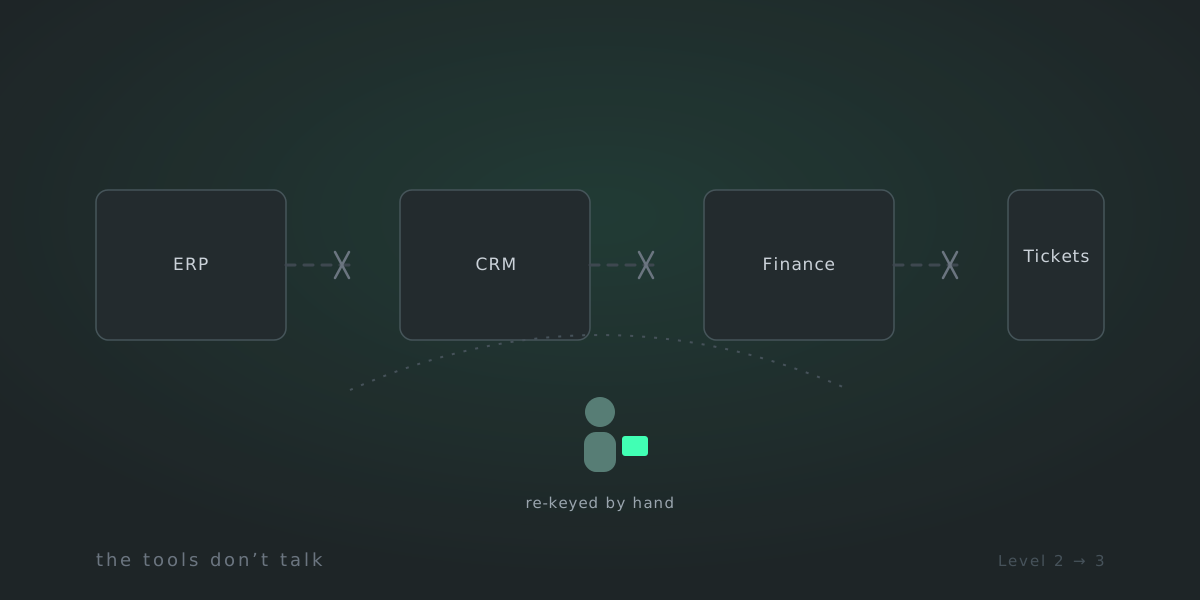
You have a strategy. You have the platforms — ERP, CRM, finance, ticketing, the lot. On paper you look like a company that has its act together.
Then you watch how the work actually moves, and you see it: someone exporting from one system to paste into another. A spreadsheet bridging two tools that were supposed to integrate. A weekly job whose entire purpose is to make the numbers in System A match the numbers in System B.
The tools are all there. They just don’t talk to each other.
The Level 2–3 trap
This is the most common place to get stuck on the maturity ladder. Level 2 — Defined is when a digital strategy takes shape: budget, roles, intentional tool choices. Level 3 — Integrated is when systems finally talk, data flows between departments instead of being re-keyed, and work runs end-to-end.
The trap is the gap between them. Companies buy the platforms but never change the process or the incentives that connect them. Expensive tools bolted onto the old way of working — and a stack that feels stitched together rather than seamless.
Re-keying is the symptom
Every manual hand-off between systems is a tax. It’s slow, it’s where errors creep in, and it quietly tells you exactly which rung you’re on. If a human is the integration between two tools, you’re not integrated — you’re at Level 2, paying people to be middleware.
A layer, not another tool
The instinct is to fix this by buying another tool. But the problem was never a missing tool — it was the missing connection between the ones you already have.
That’s why the way up is a layer that sits on top of your existing systems and orchestrates what they never could. No rip-and-replace, no migration, no lock-in. The systems stay; the connective tissue between them stops being a person with a spreadsheet.
When the tools finally talk, the re-keying disappears, the status updates write themselves, and the work runs end-to-end. That’s Level 3 — and it’s the rung most companies are one decision away from.
More on tools that serve the work: Your tools should serve the work, not hold it hostage.